We are sad & happy about leaving year3 and going to year4.
We are happy that we get to learn more and sad that many children & teachers are leaving.
Today is the last day of school till summer holidays so we get to play games but Jo and Tushar are to busy doing this blog post, so they CAN'T play.
Today we had crashed our pneumatics monsters & we called it Robot Wars!!!!!
We wish everyone a happy summer holiday.
BYE BYE !!!
Showing posts with label tushar. Show all posts
Showing posts with label tushar. Show all posts
Friday, 26 June 2009


Monday, 22 June 2009
Leap Year ...a fact you should know and another really wierd one!
You might have thought that the year 2100 is going to be a leap year,
but it isn't! Every 4 years there is a leap year and 2096 is a leap year
but surprisingly the year 2100 doesn't follow the pattern!
We checked on the Internet and two sites said that 2100 isn't a leap year!
A website said that every year divisible by 100 isn't a leap year but a year
divisible by 400 is a leap year and if a year is divisible by 400 and 100
is a leap year!
See this and this for more information.
Wednesday, 10 June 2009
Egyptian day

Today is Egyptian Day so we all wore fabulous Egyptian clothes. All of 3W wants to say thank you to the people who made the costumes possible.
When we went to see different classes, we experienced different activities: minimummymaking (see here for a great new Mummy website), Egyptian Dance and Drama and Hieroglyphics writing.
We watched the Shadow Play of mummification which was performed by the teachers.
We are now waiting ravenously for our turn to eat food from the banquet.
We also did a parade. Some people walked and danced just like real Ancient Egyptian dancers.
Thursday, 21 May 2009
Athena's illuminating light and shadow facts
Follow this link to see Athena's light and shadow facts.
There are some great safety tips here. This powerpoint was edited by Tushar.
I tried to show it in the same way as Tushar's and Luc's powerpoint, using scribd, but there was a technical problem. Oh well.
There are some great safety tips here. This powerpoint was edited by Tushar.
I tried to show it in the same way as Tushar's and Luc's powerpoint, using scribd, but there was a technical problem. Oh well.
Friday, 1 May 2009
Kidnapped!
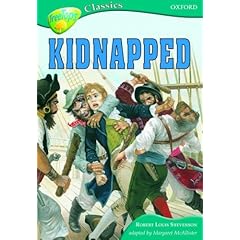
Two 3w guided reading (GR) groups have been reading the challenging Robert Louis Stevenson book, Kidnapped. This story was written in 1886 and is set in Scotland. We read the version which was adapted by Margaret McAllister.
It has old fashioned Scottish words and is a very challenging book for 7 and 8 year olds.
Have a look outside the classroom at their story pathway.
A great piece of collaboration.
Thursday, 30 April 2009
Brand new student council reps for 3W!
Congratulations to all of the candidates for applying to be student council reps:
Jessica, Grace, Sinead, Lei, Luc, Khalid, Prabhav, Tushar, Daniel and Jo.
After talking about their ideas in front of the whole class and having a secret vote and a very exciting counting process...the elected reps are:
Grace and Luc!
I'm really pleased to have so many children who are keen to take part in their council and who want to take responsibility for how their class, year group and school works.
Tuesday, 28 April 2009
Monday, 27 April 2009
Candles as clocks
Tushar did these two great pieces of research. It sounds like they could be true. What do you think?
If we could find another source which backs up the information, it would be even more credible (believable). Maybe you could research using a recent encyclopedia when we are in the library this week.
Well done!
Mr.Ben here is a lot of candle clock information A candle clock was one of the first methods of measuring the passage of time. From ancient Asia to the Dark Ages of Britain, people found ways to use candles to tell time. Though no one knows who invented the first candle clock, there is no doubt that they have been in use for centuries. Types of Candle Clocks Most candle clocks consisted of a 12-inch tall thin candle with markings that represented blocks of time. Common markings used were simple lines or numbers placed on both sides of the candle. As the candle burned past each marking, a person could have a sense of how much time was passing. Candle clocks were also used as timers. A person would stick a nail into the candle at the marking that represented the desired amount of time. Eventually the wax would melt and release the nail. The sound of the nail falling onto the candle plate alerted the person to the passage of time. Some candle clocks incorporated multiple candles and special holders. In multiple candle systems, candles of graduating sizes and markings indicated a specific period of time. As each candle burned, a person could measure time. Sometimes the candle holder or plate had panels with markings that assisted time keeping. Ancient China used candles and sticks of incense to measure time. Crude versions used sticks of different scents to measure time. Time passage was noted by a change in fragrance. Later versions of incense clocks combined sticks of incense with weights held by thread. When the stick of incense burned a thread, a weight was released and dropped on a plate. The sound of the weight on the plate indicated a passage of time. Read more: "Candle Clocks: An Early Method of Telling Time" - http://historicalresources.suite101.com/article.cfm/candle_clocks#ixzz3QOySWcOv&A I hope it is true,
If we could find another source which backs up the information, it would be even more credible (believable). Maybe you could research using a recent encyclopedia when we are in the library this week.
Well done!
Mr.Ben here is a lot of candle clock information A candle clock was one of the first methods of measuring the passage of time. From ancient Asia to the Dark Ages of Britain, people found ways to use candles to tell time. Though no one knows who invented the first candle clock, there is no doubt that they have been in use for centuries. Types of Candle Clocks Most candle clocks consisted of a 12-inch tall thin candle with markings that represented blocks of time. Common markings used were simple lines or numbers placed on both sides of the candle. As the candle burned past each marking, a person could have a sense of how much time was passing. Candle clocks were also used as timers. A person would stick a nail into the candle at the marking that represented the desired amount of time. Eventually the wax would melt and release the nail. The sound of the nail falling onto the candle plate alerted the person to the passage of time. Some candle clocks incorporated multiple candles and special holders. In multiple candle systems, candles of graduating sizes and markings indicated a specific period of time. As each candle burned, a person could measure time. Sometimes the candle holder or plate had panels with markings that assisted time keeping. Ancient China
I have more evidence that the sun spins:
Yes, the sun does spin, or rotate. Because it is a gas, it does not rotate like a solid. The sun actually spins faster at its equator than at its poles. The sun rotates once every 27 days at its equator, but only once every 31 days at its poles. We know this by watching the motion of sunspots and other solar features across the sun. The giant gas planets, Jupiter, Saturn, Uranus, and Neptune, also spin faster at their equators than at their poles.
On
This is because our Sun actually spins. (Just like our planet Earth, only much more slowly.) It takes about 27 days for the Sun to make one complete rotation.
On
from Tushar
Tushar, excellent research. Well done for including the source (the place you found the information). It would be even more reliable if we could find the same information from another source.
Subscribe to:
Posts (Atom)